16 Jul 2026
Cross-Border Player Flows Amid Evolving Gambling Licenses in the US and Canada
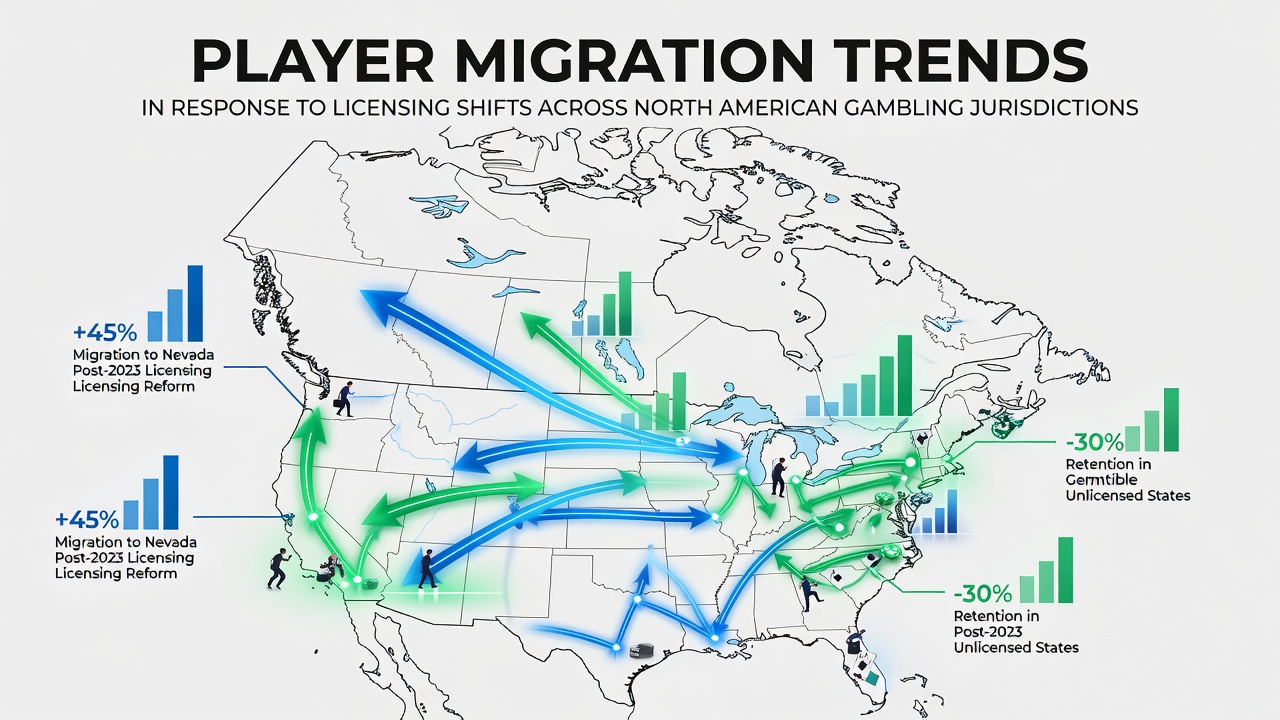 Observers note that licensing expansions in multiple North American jurisdictions have prompted measurable shifts in where players register and wager, with data tracking increased activity in newly regulated markets. States and provinces that opened online platforms between 2023 and 2025 recorded initial surges in player accounts, while neighboring areas without comparable options saw corresponding drops in local participation rates. These patterns emerge from regulatory filings and operator reports rather than isolated events. Pennsylvania and Michigan provide clear examples. After Pennsylvania broadened its online offerings, account registrations rose steadily through mid-2026, drawing users from adjacent states that maintained stricter entry requirements. Michigan experienced similar inflows once its market stabilized, with operators reporting that a notable portion of new sign-ups originated from areas where licensing delays persisted. Ontario's regulated iGaming framework, operational since 2022, continued to attract cross-province traffic even as other Canadian regions weighed similar reforms.
Key Drivers Behind Registration Shifts
Regulatory timelines play a central role. Jurisdictions that completed licensing rounds earlier captured market share before competitors launched, creating temporary imbalances that persisted into July 2026. Players responded by creating accounts in the first available legal environment that offered familiar game types and withdrawal speeds. Tax structures and fee schedules also factored into the equation, with lower operator costs sometimes translating into better promotional terms that encouraged account movement.
Payment processing compatibility added another layer. Markets requiring specific banking integrations saw faster adoption when those systems aligned with popular methods already used by players in neighboring regions. Data compiled by the American Gaming Association shows that seamless deposit options correlated with higher retention across state lines during the first half of 2026.
Regional Patterns Observed Through Mid-2026
West Coast states displayed slower migration rates compared with the Northeast and Midwest corridors. California’s ongoing legislative discussions produced limited immediate movement, whereas New York’s gradual rollout pulled users from surrounding areas once mobile access expanded. Canadian provinces outside Ontario registered modest declines in illegal site traffic as regulated alternatives in adjacent territories gained traction.
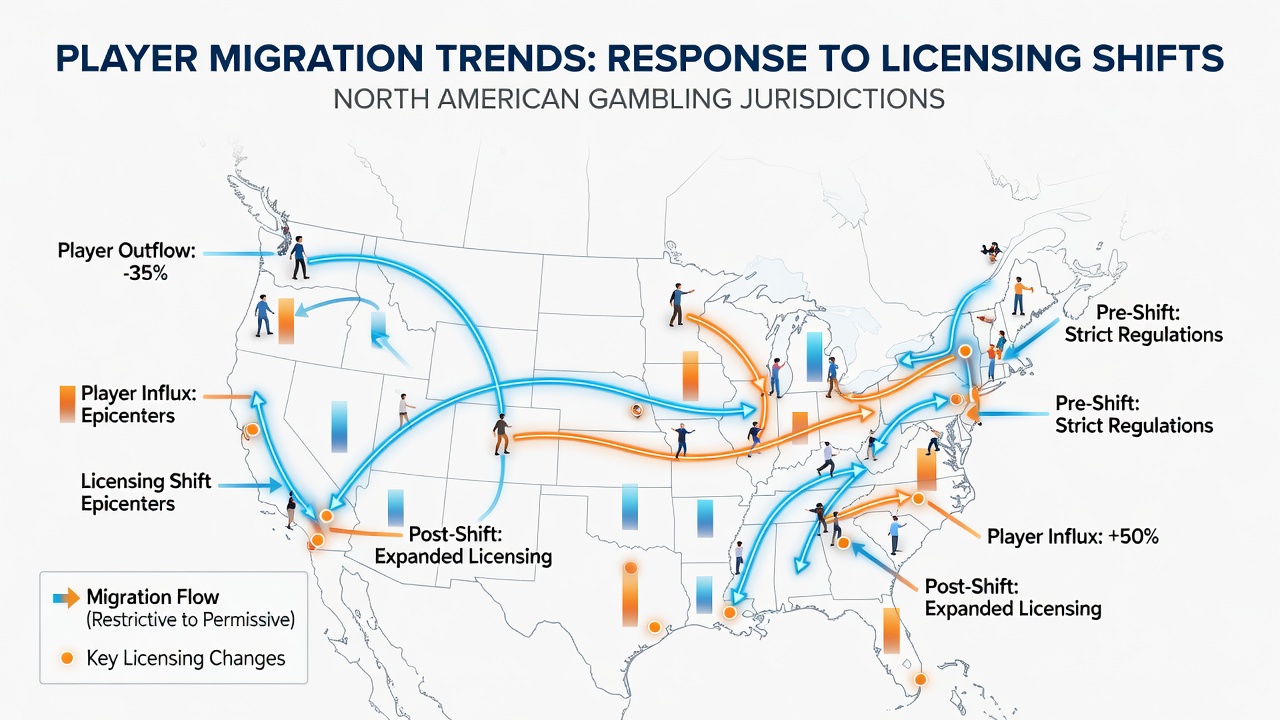
One study released by the Canadian Gaming Association tracked a 14 percent increase in Ontario-based accounts from players previously active in unregulated channels during the first quarter of 2026. Similar metrics from state gaming boards indicated that once a license went live, 20 to 30 percent of new registrations came from outside the immediate jurisdiction in the initial three months.
Operator Adjustments and Platform Features
Operators responded by standardizing loyalty mechanics across borders where regulations permitted. Cross-platform wallets and unified reward programs reduced friction for users switching between licensed environments. Those who maintained consistent bonus structures and game libraries retained higher percentages of migrating accounts according to internal performance summaries shared with regulators.
July 2026 updates in several Midwest states introduced additional sports wagering skins that further influenced registration patterns. Players who had previously used offshore platforms shifted toward state-licensed options once those skins provided comparable odds and live-event coverage. Industry reports from the National Council on Problem Gambling documented these transitions through voluntary self-exclusion data that showed declining activity on unregulated sites coinciding with new legal launches.
Longer-Term Market Stabilization
Over repeated licensing cycles, migration rates tend to moderate once multiple neighboring markets reach operational parity. Players settle into preferred platforms based on interface familiarity and payout reliability rather than regulatory timing alone. Evidence from mature markets suggests that after 18 to 24 months of dual availability, cross-border movement stabilizes at lower levels than the initial surge periods.
Regulatory bodies continue to monitor these trends through mandatory reporting. The patterns observed so far indicate that licensing velocity, combined with operational consistency, determines how much player traffic relocates versus simply expanding overall participation.
Conclusion
North American player movement in response to licensing changes reflects the sequential rollout of regulated markets rather than any single policy decision. Data through July 2026 shows clear correlations between launch dates, feature parity, and account migration volumes across state and provincial lines. As additional jurisdictions complete their licensing processes, these flows are expected to redistribute further until regulatory frameworks achieve broader alignment.