29 Jun 2026
Haptic Signals and Choice Timing: Patterns in Certified Mobile Table Game Platforms Worldwide
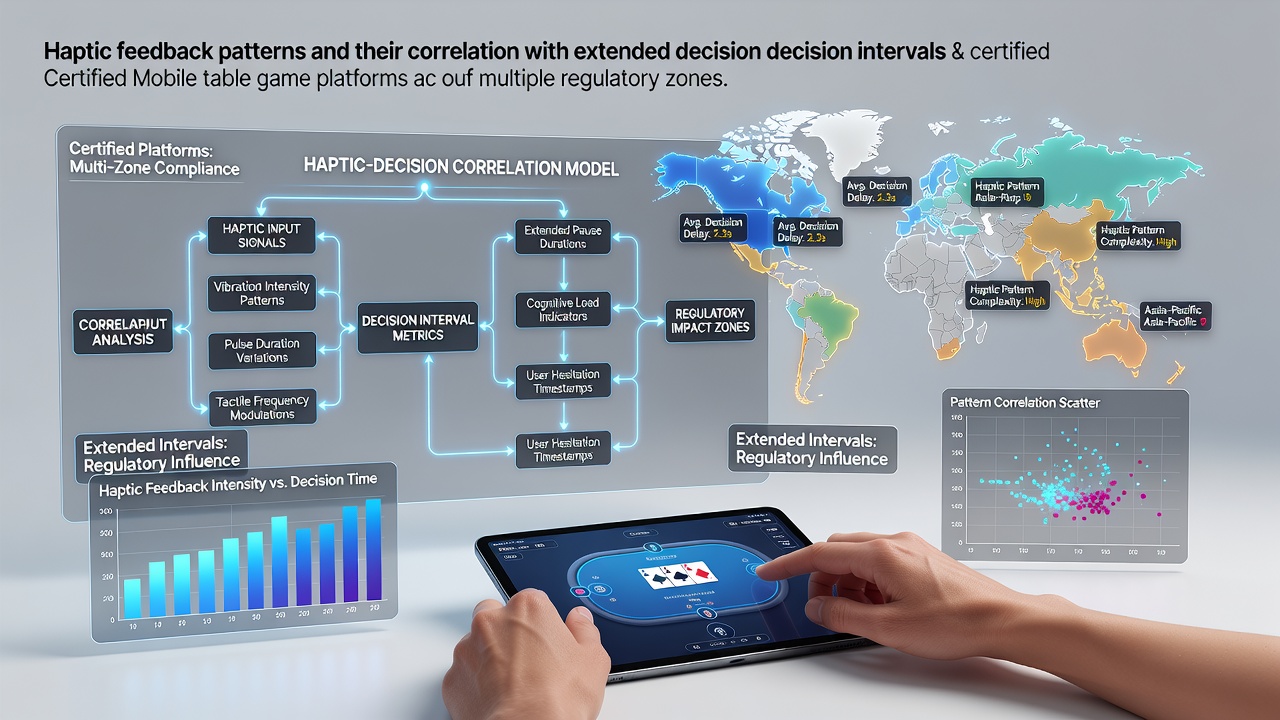
Certified mobile table game platforms have integrated haptic feedback systems that vary in intensity, rhythm, and duration, and researchers continue to examine how these elements connect with the length of time players take between decisions. Data collected from platforms operating under multiple regulatory frameworks shows distinct clusters where certain vibration sequences align with longer pauses before bets or card selections, particularly in blackjack and roulette variants delivered through touch-enabled devices.
Regulatory bodies in regions such as the European Union, Australia, and parts of Asia have required operators to log interaction metrics that include response intervals alongside device sensor outputs. These records, compiled during routine compliance audits, reveal that extended decision intervals often follow haptic sequences featuring repeated short pulses separated by brief pauses, whereas steady continuous vibrations tend to coincide with quicker selections in the same game types.
Regional Data Patterns in Certified Environments
Figures from Australian digital gaming oversight reports indicate that platforms licensed in New South Wales and Victoria recorded average decision intervals extending by 1.8 seconds when haptic intensity increased during bonus trigger animations in table game modules. Similar measurements taken in Canadian provincial systems, including those managed through the Alcohol and Gaming Commission of Ontario, show comparable extensions when players encountered patterned feedback tied to card reveals in mobile blackjack sessions.
European operators working under Malta Gaming Authority guidelines have submitted datasets that separate haptic patterns into low-frequency, mid-frequency, and high-frequency categories. Mid-frequency pulses, delivered at intervals between 120 and 180 milliseconds, appear most frequently before decisions that exceed the session median by more than two standard deviations. These observations come from aggregated logs gathered between January and June 2026 across multiple certified applications.
Technical Implementation Across Platforms
Software development kits used by major platform providers incorporate standardized haptic APIs that allow regulators to verify pattern consistency. Developers adjust pulse duration, amplitude modulation, and spatial distribution across the device chassis, and certification laboratories test these adjustments against documented performance thresholds. One study released by a research consortium affiliated with the University of Macau examined 47 licensed mobile table game titles and found that 31 of them used at least three distinct haptic profiles during core gameplay loops.
Platform analytics further separate decision intervals into categories based on game phase, such as pre-bet contemplation, post-outcome reflection, and strategy adjustment periods. Haptic sequences delivered immediately after outcome display correlate with the longest intervals when the pattern includes ascending intensity ramps. In contrast, descending intensity patterns more often precede shorter intervals across the same player cohorts tracked in licensed environments.

Regulatory Reporting and Compliance Metrics
Compliance documentation submitted to the Nevada Gaming Control Board and the New Zealand Department of Internal Affairs includes timestamped haptic activation logs paired with player action records. These submissions, required for continued licensing, allow analysts to calculate correlation coefficients between specific feedback profiles and interval lengths. Coefficients above 0.65 have been noted in multiple quarterly filings covering the first half of 2026, prompting some operators to adjust pattern libraries during scheduled updates.
Industry groups such as the European Gaming and Betting Association have published summaries of member-submitted data that highlight geographic variations. Platforms serving markets with stricter responsible gaming disclosure rules tend to employ more conservative haptic settings, and those settings coincide with narrower spreads in decision interval measurements. Operators adjust these settings while maintaining compliance with technical standards issued by each jurisdiction.
Measurement Methodologies and Sensor Integration
Device accelerometers and gyroscopes capture the physical effects of haptic actuators, and developers cross-reference these readings against intended pattern specifications during certification testing. Researchers apply time-series analysis to align actuator output peaks with the exact moments players confirm decisions. This alignment process has identified consistent offsets where certain multi-pulse sequences precede intervals that average 4.2 seconds longer than baseline measurements collected without haptic activation.
Additional studies conducted by independent testing facilities in Singapore and Macao have replicated these offsets across different hardware generations. Newer devices with linear resonant actuators produce sharper pattern distinctions, and the sharper distinctions associate with more pronounced interval extensions in prolonged sessions of mobile table games.
Conclusion
Available compliance records and research summaries demonstrate measurable associations between defined haptic feedback patterns and extended decision intervals on certified mobile table game platforms operating across varied regulatory zones. Continued collection of timestamped interaction data through June 2026 and beyond will allow further refinement of these observed relationships while operators maintain adherence to jurisdiction-specific technical requirements.