18 Jul 2026
How Interface Latency Alters Decision Timing in Licensed Online Card Game Sessions

Interface latency refers to the delay between a player's input and the system's response during online card sessions, and studies continue to track how these delays shift the timing of decisions in games such as blackjack and poker. Licensed platforms must maintain stable connections, yet even small increases in round-trip time can extend the interval between card reveals and player actions. Data from regulatory monitoring programs shows that average latencies above 150 milliseconds correlate with measurable changes in how quickly participants commit to bets or folds.
Operators in multiple jurisdictions collect telemetry on these patterns because timing directly influences game integrity and player behavior tracking. In July 2026, several European regulators updated their reporting requirements to include latency metrics alongside standard fairness audits. Those updates require platforms to log decision intervals at the millisecond level whenever network conditions fluctuate, creating larger datasets for analysis.
Measurement Standards Across Jurisdictions
Certification bodies in Nevada, Malta, and Australia apply different thresholds for acceptable latency during live dealer and RNG-based card sessions. Nevada Gaming Control Board guidelines, for instance, mandate that platform response times remain under 200 milliseconds for 99 percent of interactions in poker tournaments. Maltese authorities focus on mobile connections, requiring operators to report median latency values weekly. Australian state regulators combine both approaches, publishing quarterly summaries that link latency spikes to observed changes in betting pace.
Researchers at institutions such as the University of Nevada, Las Vegas have examined session logs from licensed operators to isolate the effect of latency on decision speed. Their methodology compares timestamps of card distribution events with the moment players submit actions, revealing that delays above 250 milliseconds increase average decision time by roughly 18 percent in heads-up poker formats. Similar patterns appear in blackjack, where players facing higher latency tend to pause longer before hitting or standing.
Game-Specific Response Patterns
Texas Hold'em sessions show distinct timing shifts because players must evaluate multiple betting rounds under time pressure. When latency rises, observers note that fold rates increase slightly on marginal hands, while call rates on strong draws remain steadier. Blackjack exhibits a different profile: latency often extends the interval before insurance decisions or double-down choices, since those options appear only briefly on screen.
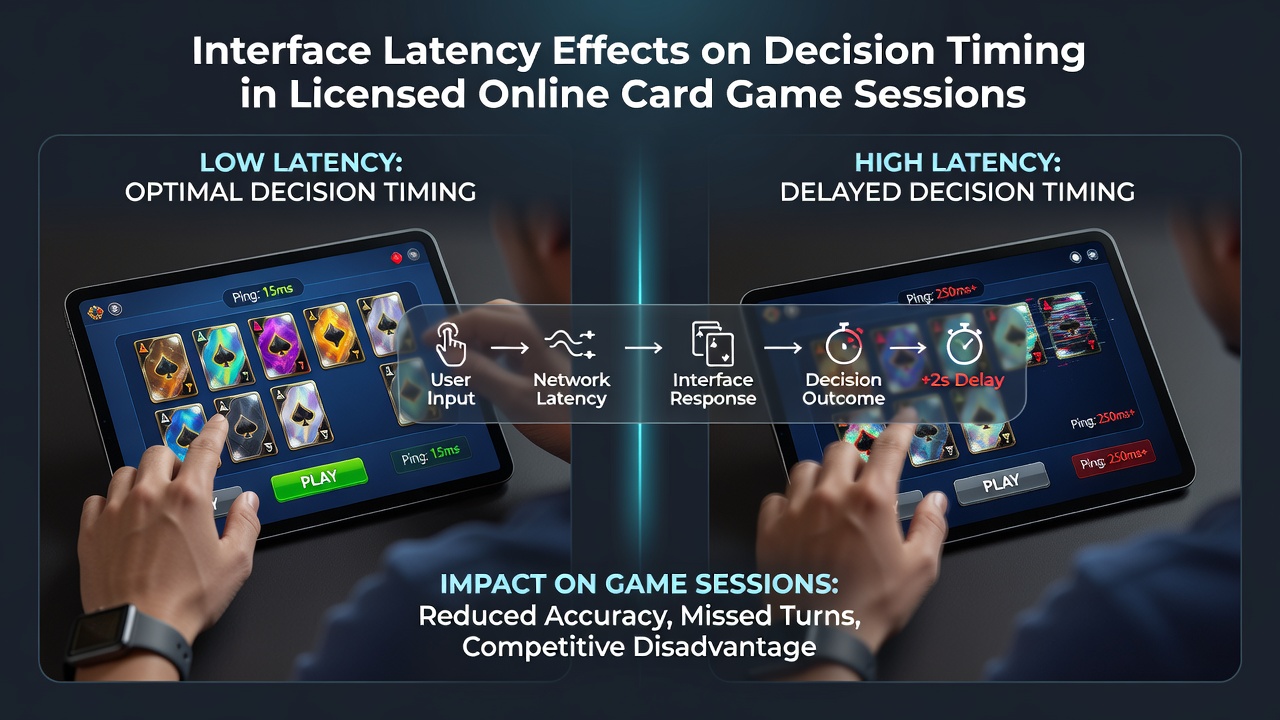
Multiplayer formats amplify these effects because each participant's delay influences the overall table rhythm. Tournament directors at licensed sites have implemented adaptive timers that extend thinking time when server logs detect elevated latency, maintaining fairness without altering game rules. These adjustments appear in both desktop and mobile environments, though mobile sessions register higher baseline variability due to wireless network conditions.
Regulatory Reporting and Data Collection
Platforms submit latency and timing data through automated feeds to oversight agencies, allowing cross-jurisdiction comparisons. The Malta Gaming Authority aggregates figures from dozens of operators and publishes anonymized summaries that highlight seasonal patterns, such as increased latency during peak evening hours in certain regions. Canadian provincial regulators have begun similar aggregation, focusing on how latency interacts with responsible gaming tools that pause sessions after extended play.
Industry reports from the European Gaming and Betting Association indicate that operators invest in edge-computing nodes to reduce round-trip times, particularly for card games that require rapid sequential actions. These infrastructure changes appear in public filings when operators renew their licenses, providing indirect evidence of how technical improvements affect decision timing distributions.
Technical Factors Influencing Outcomes
Packet loss and jitter compound latency effects, creating irregular gaps between player inputs and game state updates. Certified testing labs simulate these conditions during platform audits, measuring whether decision timing remains within acceptable bounds even under degraded network scenarios. Results from these tests feed into compliance reports that determine whether a platform can continue operating across multiple markets.
Client-side rendering also plays a role, since some interfaces preload animations that add processing time before accepting inputs. Operators document these rendering delays separately from network latency, and regulators require both categories to stay below defined thresholds. When combined, the two sources of delay can push total response times beyond levels that studies associate with altered betting behavior.
Conclusion
Latency monitoring has become a standard component of compliance for licensed online card platforms, driven by the need to understand its measurable impact on decision timing. Data collected through July 2026 continues to inform updates to technical standards across regions, while research institutions refine methods for isolating latency from other behavioral variables. Operators maintain logs that support both regulatory review and internal optimization, ensuring that timing patterns remain consistent with certified game parameters.